Saturday, March 25, 2006

Sketches from Paris


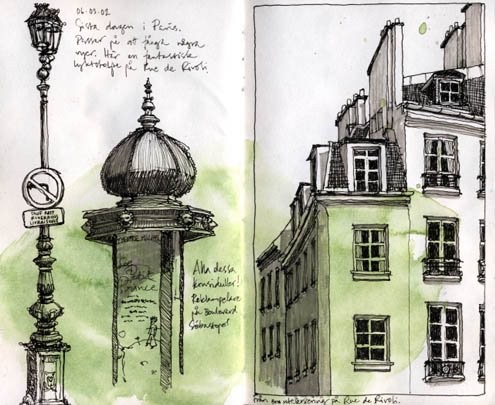
It´s been a few weeks now since we came home from Paris, but I thought I´d post a page I made there in my sketchbook. It´s the first time I´ve been sitting in a pavement café in the beginning of March, drawing. Sweden is usually still in winter in March...

Monday, March 13, 2006

EDM challenge no. 56


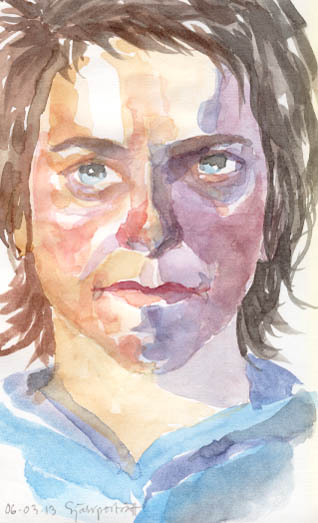
Self portraits are so hard to make. Or portraits are hard to make, no matter who you´re drawing. I tend to get stuck in the little details and when I´m finished I find that the left eye is misplaced or the nose is too long or whatever. Like in the b/w one here (of course, most of you wouldn´t know, you just have to take my word for it). After making that one I thought - what if I make another one without any lines at all, that should make it hard to get stuck in details. So, with watercolors and a brush, I tried again. Just to discover that it wasn´t easier at all. Oh well. I guess it takes a bit more practice.

Anyway, I think I succeeded in capturing one thing: that almost angry, concentrated look (here with a slight touch of squint) you get from watching yourself in the mirror for too long...

Monday, March 06, 2006

Flying watercolors

It´s been a while since I posted because I´ve been on a vacation to Paris. Wonderful as always, visited plenty of nice art supply stores, spent some time drawing, lots of time walking and just generally relaxing. Watched the Olympic games hockey final between Sweden and Finland on hotel TV with French commentators (how odd!) and almost felt a bit honored by the fact that the commentators sounded as excited over the Swedish victory as if the French would have won the whole thing.

On our flight home I tried something new - I painted this watercolor (in my sketchbook) at 10.000 meters. A little shaky here and there due to turbulence (or maybe the fact that there isn´t much wine left in the bottle...), but still - an interesting experience.

Friday, February 17, 2006

A sketchbook and some colours

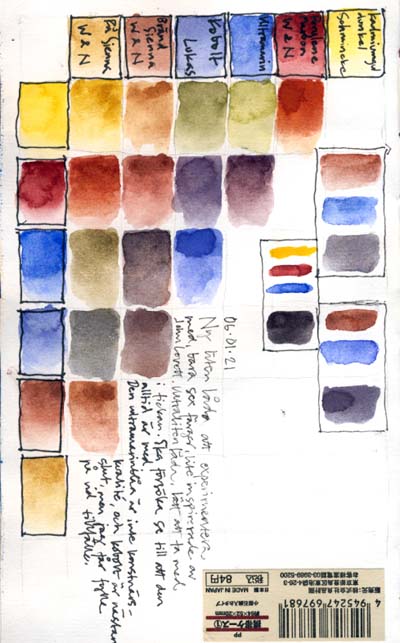
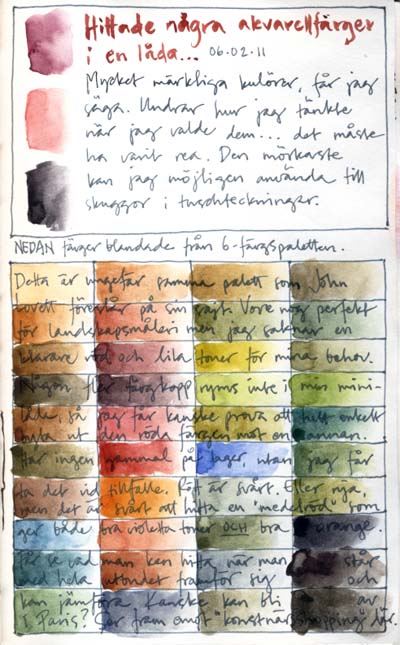
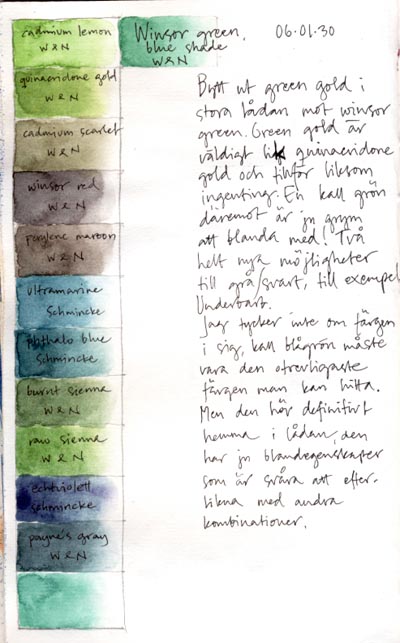
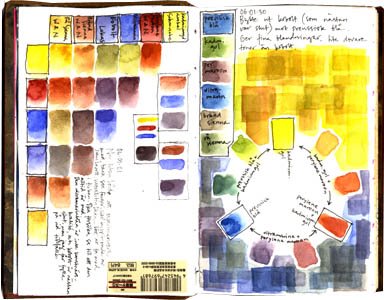
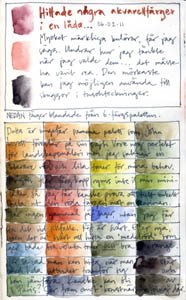
In one of the Yahoo-groups I´ve joined recently we´re discussing art workbooks/sketchbooks and perfect watercolour palettes. I´m posting these pics to show my latest experiments in both areas. (Other pages from this book can be seen in earlier and coming posts, and it will be published in it´s entirety on my homepage once it is filled.)


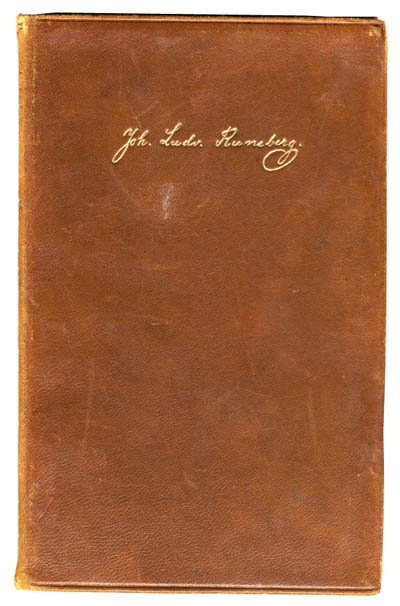
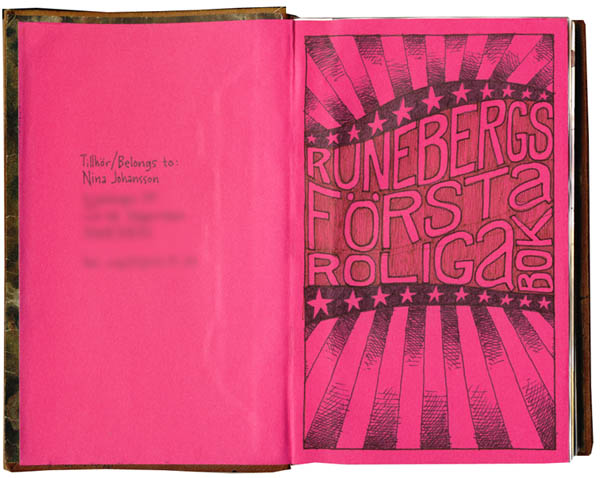
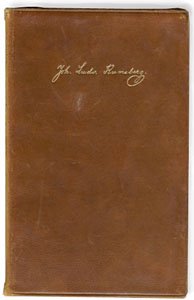
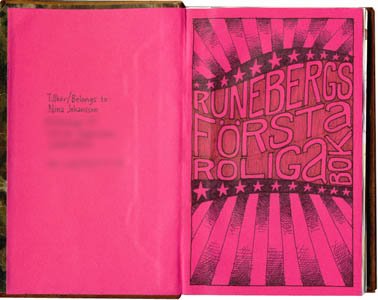
The book is a rebound leather cover of an old Runeberg novel that I ripped out (sorry, Swedish/Finnish literature-lovers, but have you ever tried actually reading his stuff??). The new signatures in it are joined together with a technique I found in “Making and keeping creative journals” (Suzanne Tourtillott, Lark Books), where you sew in linen tape across the spine of the text block for stability. Then I glued the whole text block into the cover with the pink endpapers. The book is quite small, 17,5 x12 cm (about 7 x 4.7 inches), and very sturdy. I´m actually not sure what paper I used in it, since I decided to use up paper I had left from another project. It goes well with pencil/pen/ink/watercolors, but is perhaps a bit thin if you want to get really messy with wet media.


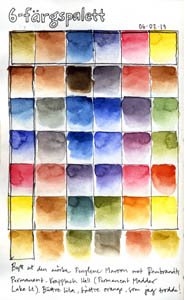
The first three colour tests are from my small watercolour palette with only six colours in it. I tried out various mixes first just to see the overall impression I got from the colours, and they looked perfect for landscape painting but I missed a clear orange and purple mixes so I changed the red color from perylene maroon to permanent madder lake light and now I´m pretty content with the mixes I get.
My small palette is always with me, I use it mainly with a Niji waterbrush, and I want it to be as versatile as possible without too many colours in it. (If you´re interested, the colours are cadmium yellow dark (schmincke), permanent madder lake light (rembrandt), ultramarine (don´t know what brand, I borrowed a tube from a friend to fill my little half pan…), phtalo blue (no brand here either), burnt sienna (winsor & newton) and raw sienna (winsor & newton).


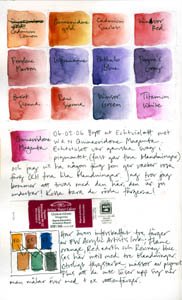
The other two colour tests are with my latest two additions to my bigger watercolour palette. I threw out green gold (it looks very much like quinacridone gold with a little blue shade in it, so I figured I didn´t really need it) and replaced it with winsor green blue shade (gives marvellous green and gray mixes, among others). And then I changed an echtviolett to quinacridone magenta – it´s impossible to “raise” a purple color to pink, but easy to mix a purple from magenta, so I think the magenta gives me a lot more possibilities. The mixes on these images are these two new colours mixed with all the others in my palette, just to get to know them better.

Tuesday, February 14, 2006

Learning from mistakes

Drawing is such a forgiving pastime. Make a mistake in your daily life and you may miss a train, lose your money or break an arm. Make a mistake with a drawing and all that happens is that you learn something. These are a few examples of not-so-excellent pages in my latest sketchbook, that still turned out okay in the end. Maybe not to the eye, but to my knowledge of drawing techniques, paper and observation.

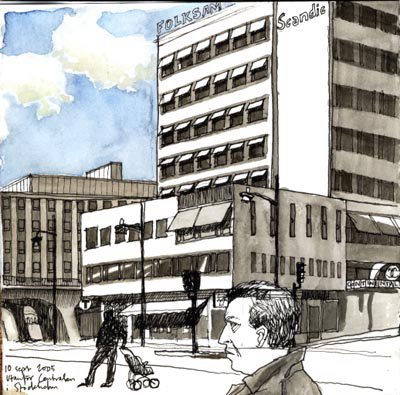
The first image is a drawing I made sitting in a café outside Central Station in Stockholm. See the man with a line across his face? He wasn´t there when I started sketching up a few guidelines for the hotel building. Then suddenly he came and sat down right in front of me and I decided to include him in the drawing. I don´t mind things like this. The line across his face is a record of time – I drew the house first, then the man came along. I will remember this, no matter how unimportant it is, because of that line.
See the high hotel building in the background? In reality that hotel has another storey, but I really wanted to squeeze it into my picture frame, because I wanted the sign on the roof to be visible in my drawing. The way I had started the drawing, the roof would end up off my paper. So I cut one storey. And you know what? No one – not one single person – in Stockholm, except me and the staff at that hotel, knows that this building is supposed to be higher. People don´t know things like that, even if they´d live right across the street from the hotel. I got the composition I wanted, and everyone I showed the drawing to (Stockholmers (by the way, is that a new word?)) recognizes the view. So no problem.

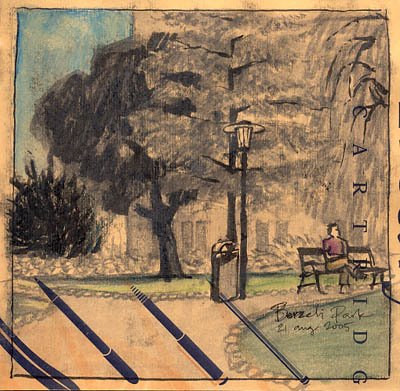
The second example is drawn in a park, on paper that I included in my sketchbook because I thought it looked cool with the letters and pens printed on it. It used to be the first page of the drawing pad that I cut up to make this sketchbook. I thought the front was made of the same type of paper as the rest of the pad, but oh was I wrong. The ink I used in this drawing just got soaked into the paper, leaving bleak gray lines. The colors (Neocolor II crayons) reacted the same way. Nothing I did on this paper seemed to leave a clear mark, so the whole thing turned out a brown mess. Lesson learned: try a pen or two on paper that you´re not sure about before including it in your journal…

The third and last page was an attempt to make a patterned background with a stencil I made (I´m crazy about patterns, especially ones that look like insane seventies´ wallpapers), only the stencil moved and the color leaked in under it and got smeared on the page. Wonderful. But I don´t like to leave pages unfinished in my books so I decided I could use this one for general doodling, starting with a contour drawing of my hand. Which turned out okay, so I did another one beside it. Suddenly the page felt interesting so I kept drawing on it, and in the end I like the composition of it all. I don´t think that sketchbook pages have to look good, that would just limit my way of drawing, but even so I still find it hard to give up too soon if a page looks like crap. And I´ve noticed so many times that if I just keep working I can usually turn mess into something interesting.

My sketchbooks contain many pages of mistakes but I kind of like them. Those pages are the ones that I have to spend the most time and effort to “save” and they are definitely the ones I learn most from. Embrace your mistakes, they are good for you!

Monday, February 06, 2006

EDM challenge no. 53

Now this was a real challenge ... how often do you sit down to take a good look at your own mouth? I have drawn self portraits before, but never concentrated on one single feature from different angles like this. Isn´t it great with all the irregularities we all have in our faces, how we are actually NOT symmetric at all although we often tend to think we are?

Monday, January 30, 2006

Watercolor habits

As I like to hear what others use to make their marks on paper, I suppose there are others like me. So I thought I´d say something about what I use, starting with the watercolors. (If you´re not into watercolors at all, you sure are going to yawn your way through this text…)
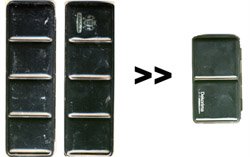


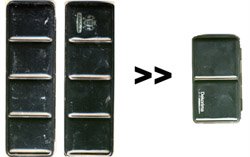
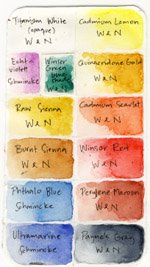
Two years ago, I had two tin boxes of watercolors. I enjoyed buying new pans of colors every now and then to experiment with, but in the end I discovered that I never used most of them. They were mostly in my way, confusing the way I mixed my colors. I must have had around 35 – 40 different colors before I decided to go a bit more minimalist. I bought myself a box that limited the number of possible colors to twelve half-pans and started experimenting with the colors I had, eliminating one by one. I´ve had this box for two years now, and I haven´t really felt the need to buy any more colors.

I have made a few small changes to it, though: After a while I got tired of the tiny size of the half pans in it (kind of messy if you´re into large brushes), so I teared out the metal holder that´s supposed to hold the pans still inside the box, and glued 10 large pans and one small in there instead. I like the small sized box, in spite of it´s crowded contents. When a pan is empty, I tear it out and glue a new one in, or I fill it with tube paint and let it dry.
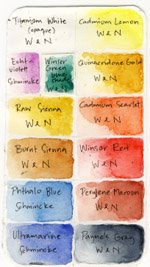
I´ve also replaced the Alizarin Crimson I used to have with Perylene Maroon. Alizarin is not lightfast, and I find it strange that in every book about watercolors you are still adviced to include Alizarin Crimson in your palette. The Perylene Maroon doesn´t give as clear purple mixes as the Alizarin, but I handled that by adding Schminckes “Echtviolett” in a half pan.

And, after much angst, I added an opaque titanium white. I´m a bit traditional when it comes to aquarelle, I don´t like to use white color and I don´t like to use black. I still don´t do that when painting in larger formats, but nowadays I sometimes use white in my sketchbooks.
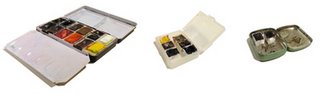


Apart from my main box of watercolors, I have two smaller ones. One contains only sepia and lamp black and I use it for shading when I draw with ink. It´s easier to bring watercolor than a bottle of ink if you´re drawing away from home. The sepia gives nice warm shades of brownish gray, while lamp black is more neutral.

The other small box is a new experiment. I have sometimes felt the need for an ultra-small box of a few colors that I can bring anywhere, in a jeans-pocket or whatever. And then I found this guy, John Lovett, on the Internet and saw his six-color palette and thought I might try it. I kind of like his approach to the whole thing with watercolors - keep it simple, don´t buy a lot of gear, just find what you like and stick with it. The tiny palette works quite well, actually. Maybe my usual twelve colors is too much?